

In today's rapidly evolving financial landscape, UK business owners face a critical decision when seeking funding: should you pursue traditional business loans or explore asset finance options? With 72% of commercial finance brokers anticipating that asset finance will lead business borrowing requirements in 2026, understanding the distinction between these funding methods has never been more crucial for your business success.
The choice between asset finance and traditional business loans isn't simply about securing funds: it's about selecting the right financial tool that aligns with your specific business objectives, cash flow requirements, and growth strategy. Each option serves distinct purposes and offers unique advantages depending on your circumstances.
Understanding Asset Finance in 2026
Asset finance represents a funding method specifically designed for acquiring physical business assets such as machinery, vehicles, equipment, or IT systems. Unlike traditional loans where you receive cash upfront, asset finance allows you to spread the cost of essential business equipment through structured monthly payments while using the asset immediately to generate revenue.

The asset itself serves as security for the arrangement, which fundamentally changes the risk profile for both you and the lender. This security mechanism makes asset finance particularly accessible for businesses that may struggle to qualify for traditional bank loans due to limited trading history or insufficient collateral.
In the UK market, asset finance facilities typically range from £75,000 to £500,000, covering both hard assets (manufacturing equipment, commercial vehicles) and soft assets (office fit-outs, technology infrastructure, refurbishments). The flexibility extends beyond simple equipment purchases to encompass complete business transformations and capacity expansions.
When Asset Finance Becomes Your Strategic Advantage
You should consider asset finance when your business needs revolve around acquiring specific physical assets that will directly contribute to revenue generation. The key scenarios where asset finance excels include equipment upgrades, vehicle fleet expansion, technology infrastructure development, and manufacturing capacity increases.
Cash flow preservation stands as the primary benefit of asset finance. Rather than depleting your working capital with large upfront purchases, you maintain liquidity for operational expenses, unexpected opportunities, and day-to-day business requirements. This approach enables you to invest in growth while maintaining financial flexibility for other strategic initiatives.
The immediate access advantage cannot be overstated. You can begin using equipment to generate revenue from day one while spreading payments over time. This arrangement typically proves more profitable than waiting to accumulate sufficient capital for outright purchases, especially when market opportunities require swift action.

Accessibility represents another significant advantage. Asset finance providers often approve applications that traditional banks might decline, particularly for younger businesses or those with limited credit history. Since the asset itself provides security, lenders focus more on the asset's value and your ability to service payments rather than extensive financial histories.
For many businesses, asset finance offers potential tax benefits through capital allowances, though you should consult your accountant to understand the specific implications for your situation. These advantages can significantly impact your overall cost of ownership.
Traditional Business Loans: When Flexibility Matters Most
Traditional business loans excel when your funding needs extend beyond specific asset acquisition. These loans provide unrestricted capital that you can deploy across various business activities including working capital requirements, marketing campaigns, staff recruitment, debt consolidation, or general operational expansion.
The fundamental advantage of traditional loans lies in their flexibility. You receive a lump sum that you can allocate according to your business priorities without restrictions on specific purchases. This flexibility makes traditional loans ideal for businesses requiring capital for multiple purposes or those facing seasonal cash flow challenges.
Lower overall costs often characterize traditional loans, particularly for established businesses with strong credit profiles. Bank loans typically offer competitive interest rates, especially when secured against property or other substantial assets. For businesses that qualify, this can result in significant savings compared to alternative financing methods.
Traditional loans also provide predictable repayment structures with fixed monthly payments that simplify budgeting and financial planning. This predictability helps you maintain consistent cash flow management while meeting your repayment obligations.
Strategic Considerations for Your 2026 Business Planning
Market data reveals a strong trend toward growth-oriented borrowing among UK SMEs, with nearly 60% of commercial brokers reporting increased requests for funding supporting business acquisitions and management buy-outs. This shift suggests businesses are prioritizing strategic expansion over short-term cash flow solutions.

Asset finance new business rose 11% year-over-year in September 2025, indicating robust demand for equipment-focused funding. If your 2026 plans include upgrading technology, expanding production capacity, or modernizing operations to maintain competitive advantage, asset finance provides a strategic tool that aligns payment structures with revenue generation potential.
Hybrid approaches are gaining popularity among sophisticated businesses. Some lenders offer tailored solutions combining asset finance with commercial facilities, allowing you to structure funding around your specific cash flows, seasonal variations, and growth timelines. These arrangements might include asset finance for equipment purchases alongside revolving credit facilities for working capital needs.
Making the Right Choice for Your Business
The decision between asset finance and traditional business loans ultimately depends on your specific circumstances and strategic objectives. Consider asset finance when you're acquiring physical assets that will directly contribute to revenue generation, when you need to preserve working capital, or when traditional lending criteria present obstacles.
Choose traditional business loans when you need unrestricted capital for multiple purposes, when your funding requirements don't involve specific asset acquisition, or when you qualify for particularly competitive rates through established banking relationships.
Avoid common mistakes such as using business loan funds for asset purchases when asset finance would be more suitable. Using £75,000 from a £100,000 business loan to buy equipment represents an inefficient allocation of capital that could limit your financial flexibility.
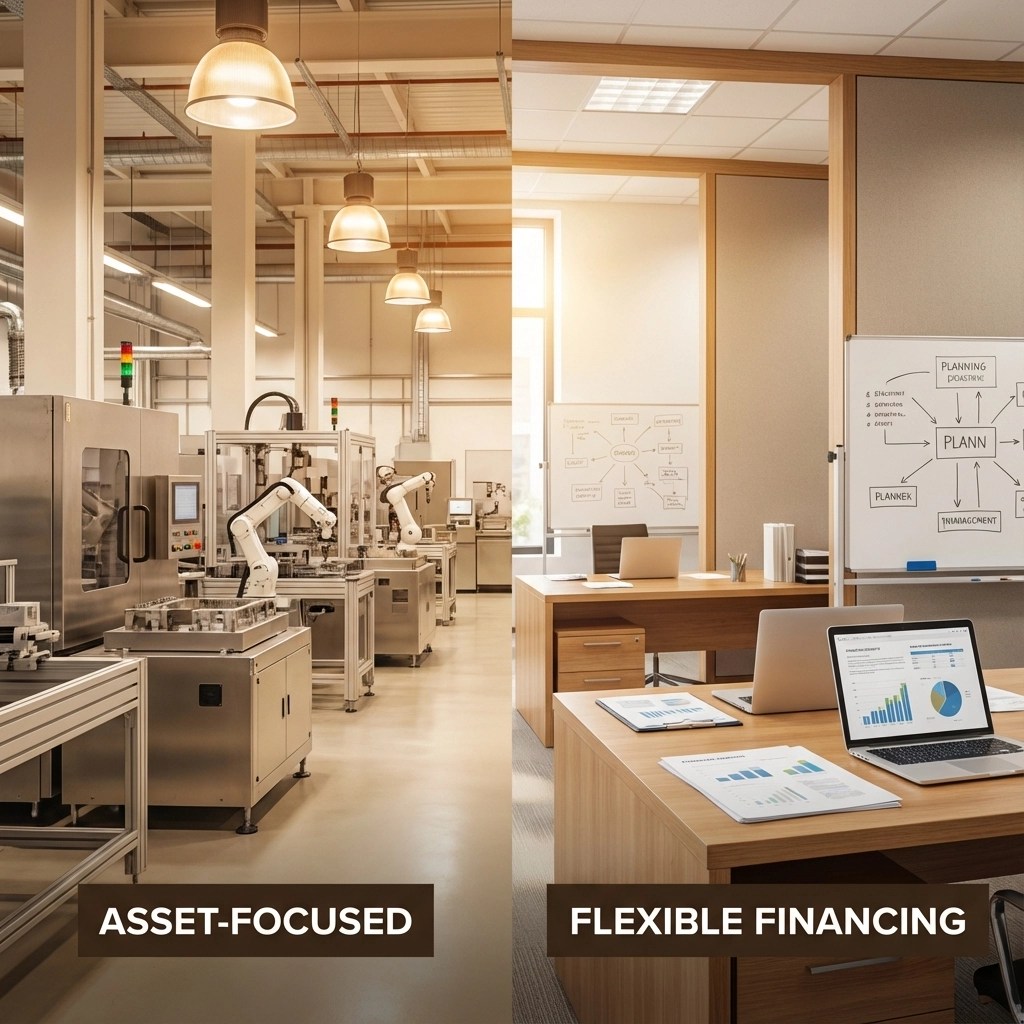
Consider your long-term strategy when making this decision. Asset finance typically works better for businesses planning equipment-led growth, while traditional loans suit those requiring operational flexibility or pursuing acquisition opportunities.
Expert Recommendations for 2026
As we move through 2026, successful businesses are increasingly adopting sophisticated approaches to funding that combine multiple finance types to optimize their capital structure. Rather than viewing asset finance and traditional loans as competing options, consider how each might serve different aspects of your growth strategy.
Timing considerations play a crucial role in your decision. Asset finance often provides faster approval and deployment, making it ideal when market opportunities require swift action. Traditional loans may require longer approval processes but offer greater strategic flexibility once secured.
Market conditions continue to favor businesses that maintain strong cash positions while investing in productive assets. Asset finance enables this balance by preserving working capital while facilitating essential investments in growth-driving equipment and technology.
Understanding these financing options and their strategic applications enables you to make informed decisions that support your business objectives while optimizing your financial position. Whether you choose asset finance, traditional loans, or a combination of both, aligning your funding strategy with your growth plans will position your business for success in 2026 and beyond.

Leave a Reply